October 21, 2024
5. Diet and Human Evolution
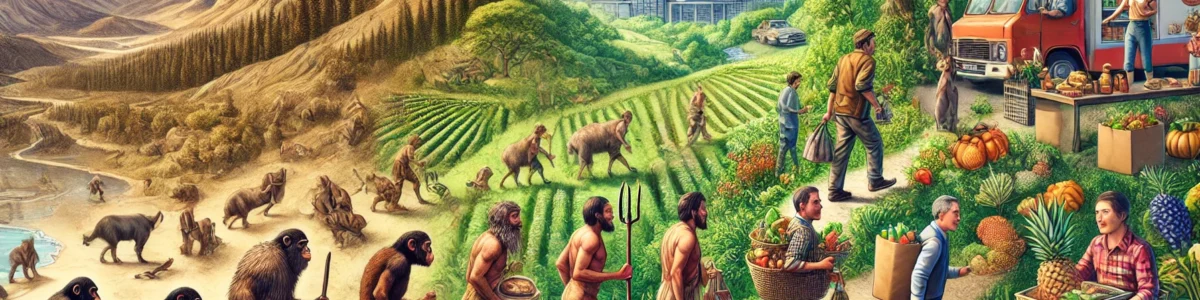
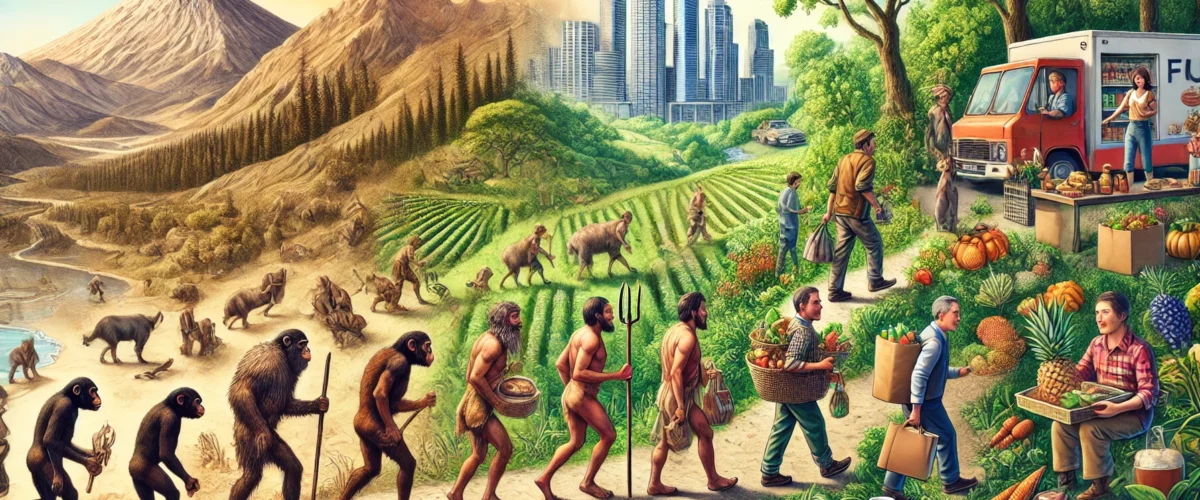
In this post, let’s digress for a minute from Alzheimer’s and look at the brain development across the evolution of humans.
How Food Scarcity Shaped Human Resilience
During evolution, individuals often experienced periods without food during the day, prolonged physical exertion, or even occasional starvation. There was no reliable source of food, so starvation was something they had to endure and survive. We will address the exertion side of this equation in a separate post about the effects of exercise. This resilience throughout their lifespan gave them stronger bodies and minds to cope with stress. The metabolic switch to ketones fuels cells in the brain’s neuronal networks, leading to greater resistance to stress, injury, and disease.
It also makes sense from this perspective: food is the number one survival instinct for humans, with protection from danger being secondary. Food is needed more frequently, following roughly an eight-hour cycle, whereas danger is encountered less often. Therefore, food-related stress has significant implications for the brain and intelligence in early humans. Based on this, intermittent fasting or dietary restriction helps build resilience and reduces inflammation and oxidative stress. Much of the signaling involved is mediated by Ghrelin, the hunger hormone released from gut cells and circulated in the bloodstream, where it acts on the hippocampus. Laboratory studies on mice have shown a 40% increase in lifespan in Alzheimer’s models with intermittent fasting.
The Evolution of the Human Diet: From Fruit to Seafood, and Beyond
If we look at the evolution of diet, apes and chimpanzees primarily ate fruit. Humans began with a fruit-based diet and later added meat once hunting tools were developed. Over time, many human-like tribes disappeared, but Homo sapiens survived in South Africa, where they relied heavily on seafood. The theory suggests that easily digestible seafood, rich in omega-3 fatty acids, may have played a key role in brain development. The brain, being largely composed of cell membranes, requires substantial amounts of fat for its phospholipid layers. This nutritional advantage could have supported the growth of language and other higher cognitive functions.
Cooking was first used around 800,000 years ago, which allowed a variety of ingredients to become edible for humans, leading to more complex diets that supported brain development. The grain and vegetable diet emerged later, as the nomadic lifestyle gave way to agriculture and cultivation. Complex language traits evolved around 100,000 years ago, and coordinated civilizations began forming about 12,000 years ago. Only the highly adaptable Homo sapiens survived, demonstrating that social interaction and stress management are higher-order skills, meaning diet alone is not sufficient for healing. In mathematics, this is referred to as a necessary but not sufficient condition.
Diet and Alzheimer's: The Challenge Isn't Knowledge, It's Implementation
We are concluding in this post the diet aspect of lifestyle changes that can help reverse or slow down the progression of Alzheimer’s. The central message is that while most people already have knowledge about diet, putting that knowledge into daily practice is difficult. Creative psychological solutions are needed the true innovation lies in the psychology, not the diet itself. For example, why not make salads a compulsory part of meals at parties and skip the sweets for once? Even vegetarians in Indian culture often do not have the habit of including salads. Without such large-scale cultural changes, it will be difficult to change our habits.