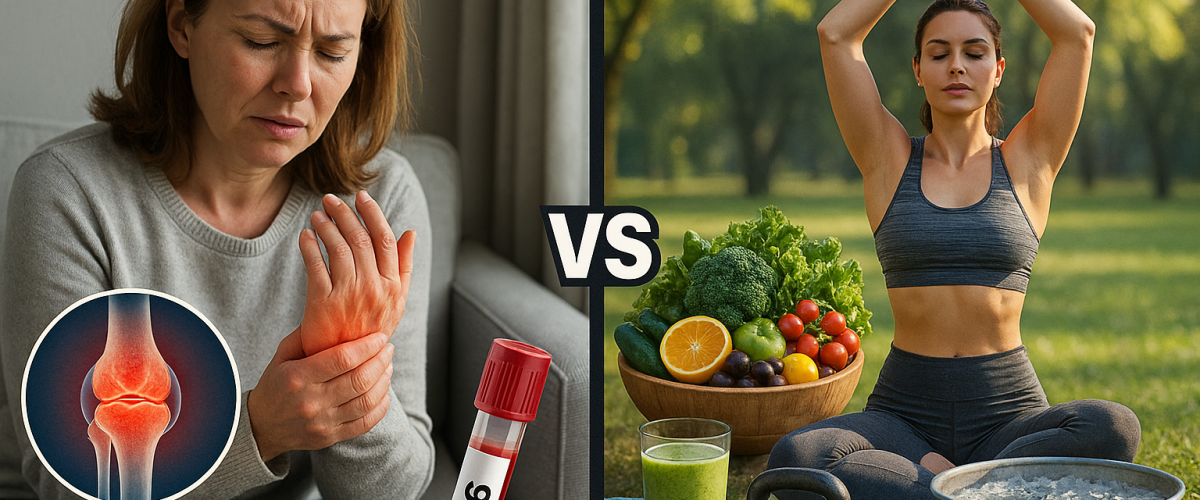
All this research leads us to an important question: if exercise induces inflammation but daily physical activity is necessary, what type of diet—before, during, or immediately after a workout—can help quickly reduce that inflammation? It turns out that a diet rich in carbohydrates and polyphenols helps lower inflammation. Consuming polyphenol- and carbohydrate-rich vegetable and fruit drinks can be beneficial; some examples are available on my website, www.alexfreeman.org. Although dairy products are high in protein, they tend to be inflammatory and should be avoided before and after exercise. A whole-grain diet, compared to one based on refined grains, has been shown to reduce IL-6 levels. Based on this, it can be concluded that consuming recovery or body-healing supplements before and after workouts may also help decrease inflammation. Turmeric is one of the most effective natural anti-inflammatories. It can be used in many forms—sprinkled as a powder over food, brewed as a tea using the root, or incorporated into other recipes. (A tea recipe is available on my website as well.) Potassium intake is especially beneficial for individuals with rheumatoid arthritis (RA). Increasing the consumption of green leafy vegetables naturally raises potassium levels. Additionally, probiotics are well known for their ability to reduce inflammation and support gut health.
1. Acute Physiologic Effects of Performing Yoga in The Heat on Energy Expenditure, Range of Motion, and Inflammatory Biomarkers BRADLEY S. LAMBERT, Int J Exerc Sci. 2020 May 1;13(3):802-817. doi: 10.70252/AKMZ9424. eCollection 2020.
2. Time-restricted eating effects on performance, immune function, and body composition in elite cyclists: a randomized controlled trial, Tatiana Moro, J Int Soc Sports Nutr. 2020 Dec 11;17(1):65. doi: 10.1186/s12970-020-00396-z
3.Serum levels of interleukin-6 and dehydroepiandrosterone sulphate in response to either fasting or a ketogenic diet in rheumatoid arthritis patients
Surgery-InducedD A Fraser, Clin Exp Rheumatol. 2000 May-Jun;18(3):357-62.
4.“Inflammatory effects of high and moderate intensity exercise – A systematic Review’, by Cerqueira, E, FRONTIERS IN PHYSIOLOGY, Volume10, DOI10.3389/fphys.2019.01550
5. “Lower white blood cell counts in elite athletes training for highly aerobic sports”, P Holt., European Journal of Applied Physiology, V110, p925-933, 2010.
6. “Exercise training, circulating cytokine levels and immune function in cancer survivors: A meta-analysis”, by Nasim Khosravi, Brain Behav Immun. 2019 Oct:81:92-104. doi: 10.1016/j.bbi.2019.08.187. Epub 2019 Aug 24
7.“Carbohydrate and the cytokine response to 2.5 h of running, Authors: S. L. Nehlsen-Cannarella, et al., Journal of Applied Physiology, Volume 82, Issue 5, https://doi.org/10.1152/jappl.1997.82.5.1662
8.“Influence of a Polyphenol-Enriched Protein Powder on Exercise-Induced Inflammation and Oxidative Stress in Athletes: A Randomized Trial Using a Metabolomics Approach”, David C. Nieman et al., Published: August 15, 2013, https://doi.org/10.1371/journal.pone.0072215
9. Whole grain-rich diet reduces body weight and systemic low-grade inflammation without inducing major changes of the gut microbiome: a randomised cross-over trial
Henrik Munch Roager, et al., Gut. 2019 Jan;68(1):83-93. doi: 10.1136/gutjnl-2017-314786. Epub 2017 Nov